


Dermapen Versus Traditional Rollers Compared
AdminA microneedling device is not simply a tool that creates microchannels. It shapes the treatment experience, influences how confidently a provider can work across facial zones, and affects the hygiene systems behind every appointment. In the Dermapen versus traditional rollers conversation, the real distinction is not whether one tool has needles and the other does not. It is the level of precision, control, and consistency your practice can bring to each treatment.
For providers building a premium aesthetic offering, that distinction matters. Clients notice comfort, professionalism, and visible attention to detail long before they understand device engineering. Your team notices it in setup time, cartridge management, and the ability to personalize protocols with confidence.
Dermapen Versus Traditional Rollers: The Core Difference
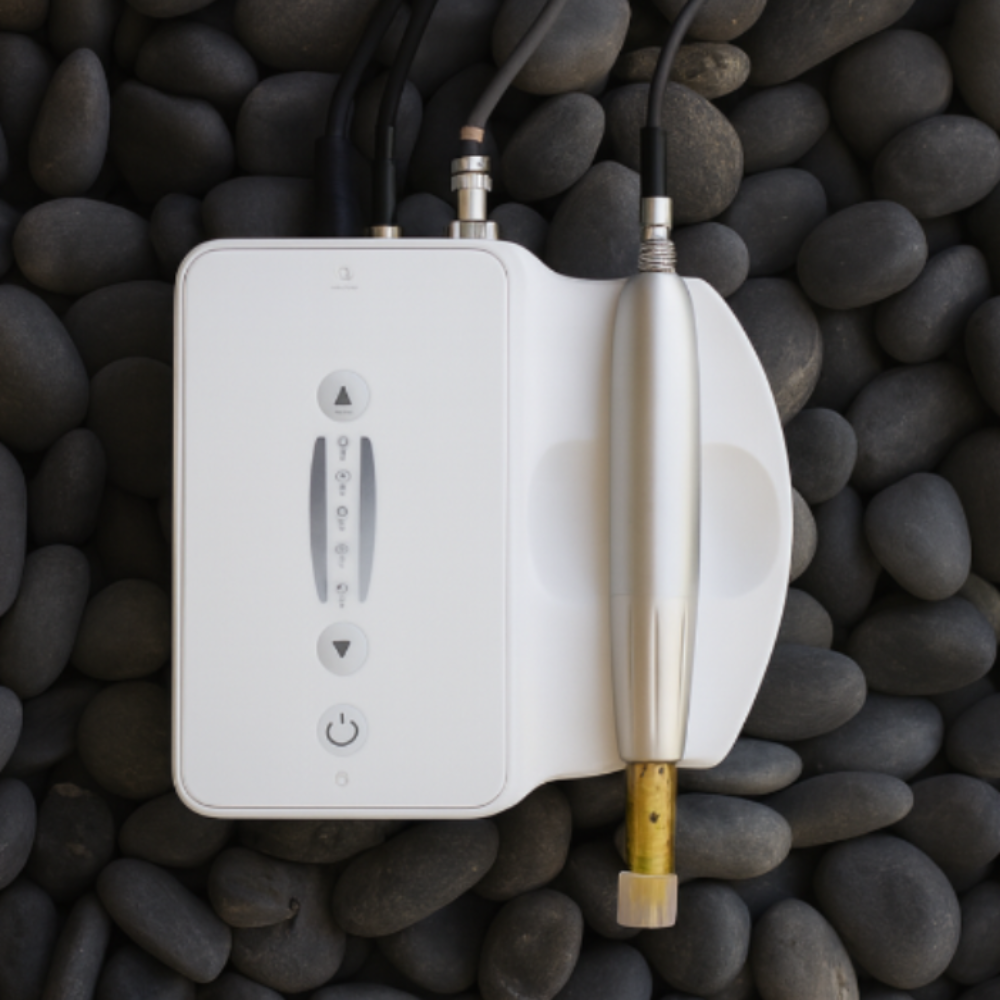
Traditional dermarollers use a cylindrical wheel covered in needles. As the wheel passes over the skin, the needles enter and exit at an angle created by the rolling motion. Motorized microneedling pens use a disposable cartridge with needles that move vertically in a controlled, repeated stamping action.
Both approaches are designed to create controlled micro-injuries that support the skin’s natural renewal response. Yet the way those channels are created is meaningfully different. A roller relies on the provider maintaining even pressure and a consistent rolling path. A pen gives the provider greater ability to adjust technique according to the area being treated, the selected depth, the client’s skin concerns, and the treatment protocol.
That does not make a roller irrelevant in every setting. It does mean that a practice seeking a refined, repeatable professional service will usually find more flexibility in a precision pen system.
Precision Is More Than a Technical Detail
The face is not a flat surface. The forehead, nose, upper lip, cheeks, jawline, and delicate eye area each present different contours and treatment considerations. A cylindrical roller can be harder to maneuver evenly through tight or curved zones. Repeated passes may also be needed to achieve coverage, which can make consistency more dependent on individual technique.
A professional microneedling pen is designed to move with greater agility. The provider can work in controlled sections and tailor the treatment approach as they move from a broader cheek area to a more detailed zone around the mouth or nose. Adjustable needle depth, where permitted by the device instructions and the provider’s scope of practice, supports a more considered protocol rather than a one-size-fits-all pass.
Vertical needle entry is another practical advantage. Rather than the arcing motion of a wheel, a stamping-style mechanism is intended to create more direct channels. For practitioners, this can translate into a treatment that feels more controlled, especially when working on concerns such as uneven texture, the appearance of blemish marks, or visible signs of skin aging.
Precision also supports better consultation conversations. When you can explain why a particular setting, technique, and supportive skincare plan were selected, the service feels personal rather than procedural. That is part of the elevated experience clients expect from a modern med spa or aesthetics practice.
Treatment Comfort and Client Confidence
Comfort is influenced by many factors, including needle selection, treatment settings, topical products, preparation, provider technique, and individual sensitivity. No device can promise the same experience for every client. Still, the motion of the device plays a central role.
Rollers can create a dragging or tugging sensation because the needles enter and leave the skin along a curved path. This may be especially noticeable in areas where skin is thinner or less taut. A motorized pen’s vertical motion is often preferred in professional environments because it can feel more controlled and less reliant on pressure from the provider’s hand.
Client confidence is closely tied to this experience. A person who feels informed, supported, and comfortable is more likely to follow aftercare instructions, return for a recommended series, and speak positively about your practice. The device is only one part of that journey, but it is a highly visible one.
Set expectations clearly. Explain that temporary redness, sensitivity, and a feeling of warmth can occur after microneedling. Review realistic treatment goals, contraindications, aftercare, and the importance of professional assessment. Clinical credibility is built through honest guidance, not oversized promises.
Hygiene: Where Professional Systems Separate Themselves
In a professional setting, hygiene is not a bonus feature. It is fundamental to client safety and operational trust.
Reusable rollers require careful cleaning, disinfection, inspection, storage, and eventual replacement. Needles can become bent or dulled with use, and an improperly maintained roller introduces avoidable uncertainty. Even when a roller is intended for single-client use, the practice must establish clear handling and disposal protocols.
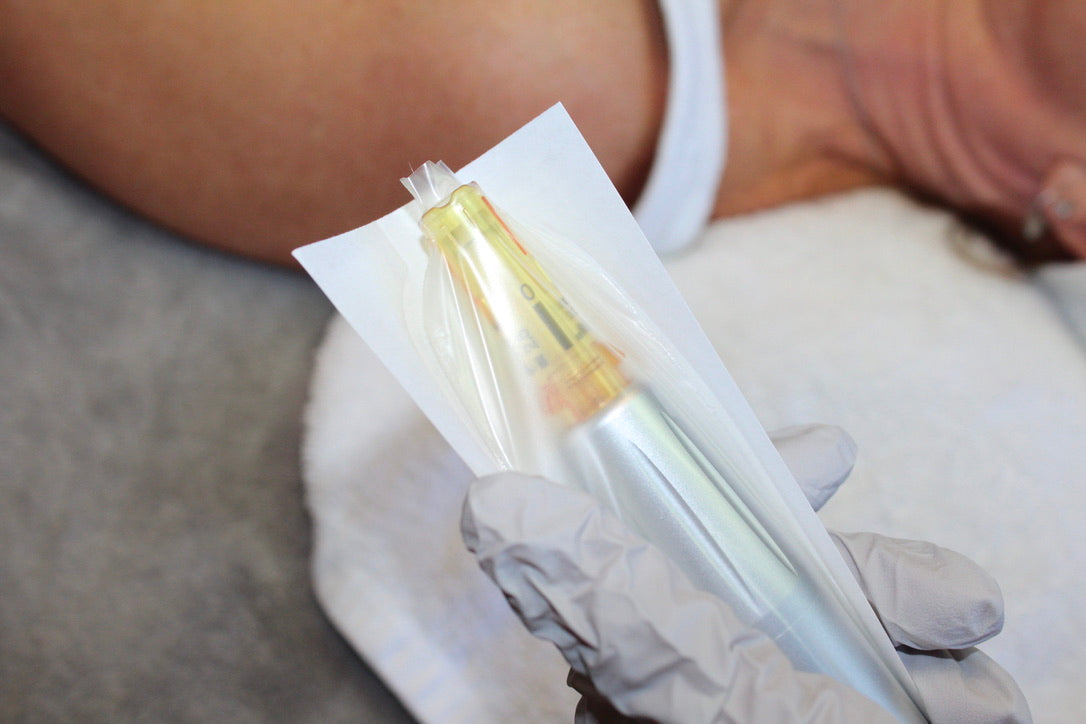
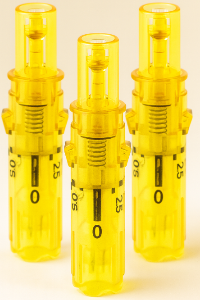
Professional pen systems are commonly designed around sterile, single-use disposable cartridges. A fresh cartridge for every treatment creates a clear visual and operational standard. It supports a more organized treatment room, simplifies turnover, and makes it easier for providers to communicate their commitment to hygiene.
For high-volume practices, that consistency carries commercial value as well. Replenishable cartridges create a dependable supply workflow, while standardized device protocols can make staff training and quality control more manageable. The initial investment in a professional system should be considered alongside the ongoing cost of consumables, maintenance, staff education, and the experience you want to deliver.
Speed, Coverage, and Protocol Control
A roller can cover broad areas quickly, which is one reason it has remained familiar in the consumer market. However, speed alone does not equal efficiency. If an operator needs multiple directional passes to create even coverage, the treatment may become less streamlined than it first appears.
Motorized pens offer speed through consistent needle movement rather than through the width of a rolling head. They can be used thoughtfully across large areas while also allowing more detailed work where the skin’s contours demand it. This supports smoother transitions during the appointment and can reduce the need to switch tools between zones.
Protocol control is especially valuable when a practice serves a diverse client base. Skin tone, sensitivity, treatment history, and current skincare use all require careful evaluation. Providers working with melanin-rich skin, for example, should take an especially considered approach to consultation, inflammation management, and post-treatment care. A precise device does not replace clinical judgment, but it can give skilled practitioners more control over how they apply that judgment.
When a Traditional Roller May Still Have a Place
Traditional rollers are generally more affordable upfront and familiar to many consumers. For a retailer focused on entry-level skincare tools, that accessibility may be appealing. Some people also prefer a simple, manual approach for at-home cosmetic routines.
But home use and professional treatment should not be treated as equivalents. Deeper microneedling requires appropriate training, assessment, infection-control practices, and adherence to state regulations and professional scope. A practitioner should never select a device solely because it is inexpensive or easy to find.
A roller may be suitable for limited retail education or for clients seeking a basic cosmetic tool, provided the use case, needle length, hygiene requirements, and contraindications are clearly explained. It is less compelling when your goal is a high-touch clinical service with individualized treatment plans and a premium standard of care.
Choosing the Right Device for Your Practice
The best choice starts with the service model you are building. If your practice prioritizes standardized hygiene, precise treatment control, elevated client comfort, and adaptable protocols, a professional pen system is likely the stronger long-term fit. It also aligns naturally with a business model built around repeat treatments, professional education, and supportive skincare.
Evaluate more than device price. Ask how easy the handpiece is to maneuver, whether cartridges are reliably available, how treatment depth is controlled, what education is provided, and how the manufacturer supports professional users. Consider the client journey as carefully as the technical specification.
Dermapen is designed for practitioners who want precision engineering to feel as elegant in the hand as it does in the treatment room. Paired with an informed consultation and skin-supportive aftercare, the right system helps turn microneedling from a basic appointment into a confidence-building ritual grounded in professional care.
The most compelling treatment menu does not chase technology for its own sake. It gives providers a clear reason for every choice and gives clients the reassurance that their skin is being treated with intention. When that standard guides your device decision, better experiences tend to follow.