


Treatment Room Sanitation That Builds Client Trust
AdminA client may never ask how you disinfect your treatment bed, manage used cartridges, or reset a room between appointments. They will notice the result. A fresh, orderly space signals precision before a device ever touches skin. Treatment room sanitation is not a background task in professional aesthetics. It is part of the treatment experience, your clinical standard, and the trust that keeps clients returning.
For microneedling providers, sanitation deserves particular attention. Treatments can involve pinpoint bleeding, compromised skin barriers, reusable surfaces, and single-use consumables. A beautiful room matters, but a clinically disciplined room matters more. The goal is to create an environment where advanced skin rejuvenation feels elevated, comfortable, and consistently safe.
Sanitation Is More Than a Quick Wipe Down
Cleaning, disinfection, and sterilization are related, but they are not interchangeable. A high-performing practice understands where each belongs.
Cleaning removes visible soil, product residue, and organic material from a surface. It is the first step because disinfectants cannot perform reliably over debris. Disinfection uses an appropriate EPA-registered product to inactivate many disease-causing microorganisms on environmental surfaces. Sterilization is a more intensive process intended for critical instruments that enter sterile tissue or the vascular system, and is generally handled through validated equipment and protocols when applicable.
Most treatment-room surfaces require cleaning followed by disinfection between clients. Your device handpiece, however, must always be handled according to its manufacturer instructions for use. Never assume that a stronger product, longer soak, or extra moisture is better. The wrong process can damage precision equipment or create an avoidable safety concern.
The same principle applies to local regulations. State board requirements, facility policies, occupational safety rules, and product instructions may differ. Your sanitation protocol should meet the strictest applicable requirement and be reviewed whenever you introduce a new service, device, or product.
Build Treatment Room Sanitation Into the Appointment Flow
The most reliable sanitation system is one that does not rely on memory during a busy day. Organize the room so clean supplies, treatment items, and used materials follow a clear one-way path. This reduces cross-contamination and gives every provider a repeatable rhythm.
Before the client arrives, begin with clean hands and a prepared room. Disinfect the treatment bed, tray, counter, magnifying lamp handles, chair arms, door handles, and any other high-touch surfaces. Allow the disinfectant to remain wet for the full contact time stated on its label. Spraying and immediately wiping dry may look efficient, but it can undermine the product's efficacy.
Place only what you expect to use for that appointment on the treatment tray. Keep remaining supplies closed and protected from splash, dust, and unnecessary handling. If you use a covered tray or drawer system, replenish it only after you have completed room turnover and hand hygiene.
During the service, keep clean and contaminated zones distinct. Once a gloved hand has touched the client's skin, an applicator, or a contaminated surface, it should not reach back into product containers or clean storage. Dispense product in advance where appropriate, use single-use applicators, and change gloves whenever they become contaminated or when moving from one task to another.
After the appointment, dispose of single-use items immediately and correctly. Remove gloves, perform hand hygiene, and then clean and disinfect the room from cleaner areas toward more contaminated areas. Finish by laundering linens or discarding disposable coverings according to your facility procedure. A room should be fully reset before the next client is welcomed in, not while they are waiting at the door.
Microneedling Requires a Higher Level of Intention
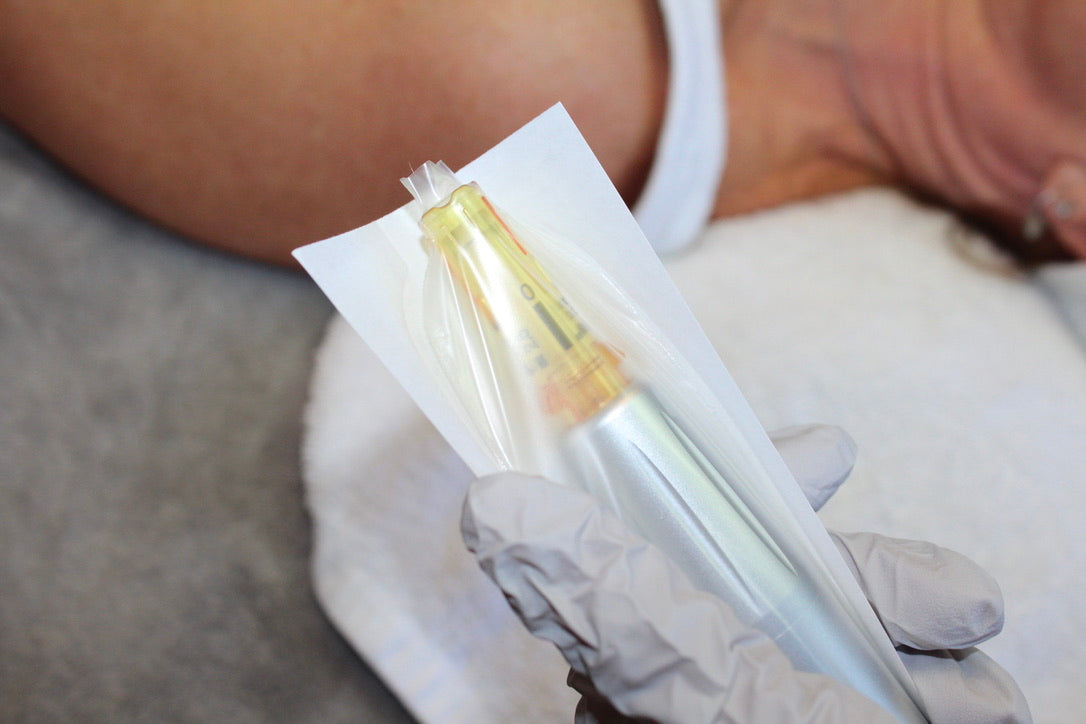
Microneedling is a precision treatment, and every element of the setup should protect that precision. Sterile, single-use cartridge systems are central to this standard. A cartridge should be opened in front of the client or immediately before the treatment, used for one client only, and never reprocessed or reused.
Before beginning, inspect the packaging for integrity and confirm the cartridge is within its expiration date. If packaging is torn, wet, opened, or questionable, discard it. This small pause communicates professional care and protects the quality of the treatment.
Used cartridges and sharps must go directly into an approved sharps container. Do not recap, bend, break, or leave them on the tray while you complete aftercare conversations. Keep sharps containers upright, accessible, and replaced before they are overfilled. A container that is too full turns a controlled disposal step into an unnecessary exposure risk.
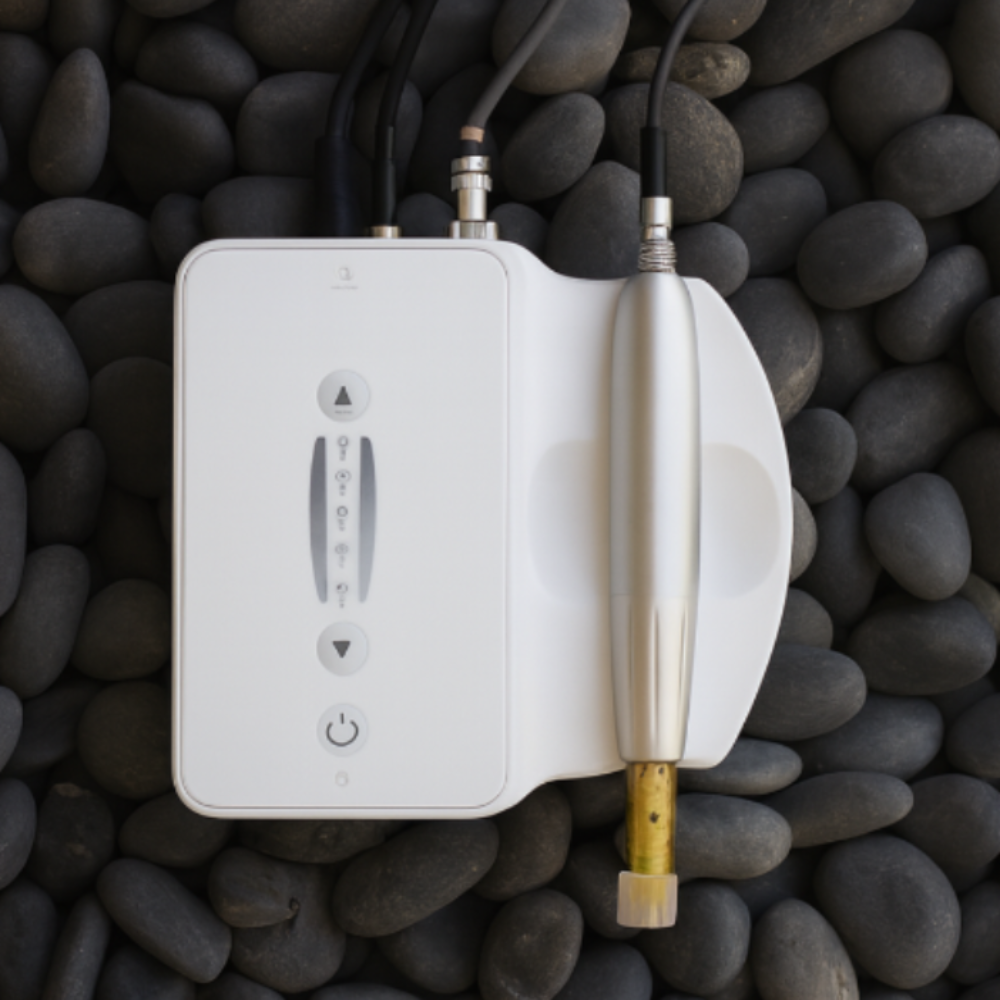
Your handpiece deserves equal respect. With systems such as Dermapen, follow the device-specific instructions for cleaning and disinfection, including guidance for surface wiping, protective barriers, charging, and storage. Never immerse an electrical handpiece unless its manufacturer explicitly directs you to do so. Precision engineering performs best when it is cared for with precision.
The Surfaces Teams Most Often Miss
Practices rarely overlook the treatment bed. The missed details are usually the objects touched during the natural flow of care: drawer pulls, tablets, pens, ring lights, magnifying lamps, product pump tops, rolling stools, cabinet handles, and payment devices.
Create a room-specific checklist that reflects your actual workflow instead of a generic list that no one follows. Observe one complete appointment from setup through checkout. Every object touched with gloved hands or after client contact belongs in your sanitation plan.
Soft surfaces also need a deliberate approach. Use linens that can be changed between every client and laundered according to appropriate guidance. If decorative pillows, upholstered furniture, or fabric throws cannot be effectively cleaned between clients, keep them outside the active treatment area. Luxury does not require clutter. A calm, refined room with fewer difficult-to-sanitize items often feels more premium.
Products, Contact Time, and Compatibility Matter
The right disinfectant is not simply the one with the strongest scent or most dramatic marketing. Choose products appropriate for the surfaces and organisms covered by your facility protocol, then use them exactly as labeled. Pay attention to dilution instructions, expiration dates, storage temperatures, ventilation needs, and contact time.
Compatibility matters, especially around device finishes, acrylic surfaces, vinyl beds, and sensitive electronics. Harsh chemicals can cloud materials, degrade upholstery, or compromise equipment over time. Review product documentation before changing disinfectants, and train every team member on approved products rather than allowing individual preference to set the standard.
Avoid transferring contamination through bottles and containers. Wipe the exterior of frequently handled products, do not top off partially used containers unless your policy and product guidance allow it, and label secondary containers clearly. A polished retail display should never compromise the integrity of treatment inventory.
Train for Consistency, Not Just Compliance
A sanitation protocol only works when every provider can perform it confidently under real appointment pressure. Initial training is essential, but periodic observation is where consistency is built. Review hand hygiene, glove use, cartridge disposal, room turnover, disinfectant contact time, and exposure-response procedures with the entire team.
Documentation can be simple and still effective. Daily opening and closing checklists, equipment-cleaning logs, and supply checks create accountability without making the room feel bureaucratic. If an issue occurs, the goal is not blame. Identify the gap, correct the process, and protect the next client.
It also helps to explain your standards when clients show interest. A brief statement such as, “We use a new sterile cartridge for every treatment and fully disinfect the room between appointments,” reassures without creating alarm. Professional transparency turns an invisible process into a visible reason to trust your practice.
A Clean Room Supports Better Care
Treatment room sanitation is not separate from the client journey. It supports focused consultations, confident treatment delivery, and a recovery experience that feels considered from start to finish. When supplies are organized, surfaces are properly disinfected, and every cartridge is handled with care, your team has more space to focus on what clients came for: thoughtful expertise and visible skin transformation.
Let your sanitation standard be felt in the calm of the room, the certainty of your process, and the confidence your clients carry out the door.