


Melasma Microneedling Treatment Case Study
AdminA melasma microneedling treatment case study should never be read as a promise that needling will erase pigment. Melasma is biologically persistent, highly individual, and easily aggravated by heat, inflammation, ultraviolet exposure, visible light, and hormonal shifts. For the right patient, however, a conservative, pigment-conscious microneedling plan may support a more even-looking complexion while respecting the skin’s inflammatory threshold.
The clinical value is in the decision-making, not simply the device setting. This illustrative composite case is designed for licensed aesthetic professionals who want to understand where microneedling may fit within a broader melasma management strategy - and when it should not.
Why Melasma Requires a Different Treatment Mindset
Melasma is not ordinary discoloration. It commonly presents as symmetrical brown to gray-brown patches across the cheeks, forehead, upper lip, chin, or jawline. It can involve epidermal pigment, dermal pigment, or a mixed pattern, and it often behaves like a chronic condition rather than a one-time concern.
That distinction changes the treatment conversation. A client may request an aggressive corrective procedure after seeing dramatic online results, yet an overly inflammatory intervention can trigger post-inflammatory hyperpigmentation or worsen the melasma itself. In melanin-rich skin especially, visible improvement must be balanced with a disciplined approach to barrier support, careful treatment depth, and strict photoprotection.
Microneedling creates controlled microchannels in the skin. In appropriate candidates, this may support collagen remodeling and improve the delivery of professionally selected topical products. But controlled does not mean consequence-free. Treatment pressure, depth, pass count, interval timing, topical selection, and post-care compliance all matter.
Melasma Microneedling Treatment Case Study: The Starting Point
Our composite patient was a 38-year-old woman with Fitzpatrick skin type IV and a two-year history of patchy, symmetrical facial melasma. Her primary concern was the appearance of brown patches across the upper cheeks and forehead, which had become more noticeable after a sunny vacation and a period of inconsistent sunscreen use.
She had previously used over-the-counter brightening products with limited results. Her skin was not actively irritated at consultation, but she reported occasional sensitivity around the nose and cheeks. There was no history of keloid scarring, active acne, cold sores, recent isotretinoin use, pregnancy, or a current inflammatory skin condition. These details matter because they influence both candidacy and the level of medical oversight required.
The clinician’s first decision was not to begin microneedling immediately. For four weeks, the patient followed a skin-preparation phase centered on daily broad-spectrum tinted mineral sunscreen, gentle cleansing, barrier-supportive hydration, and a professionally chosen pigment-management regimen appropriate to her skin and medical history. The goal was to reduce avoidable triggers, improve adherence, and confirm that the skin could remain calm before introducing a procedure.
Clinical photographs were taken in consistent lighting, with the patient positioned the same way each time. This established a more reliable baseline than memory or mirror checks. The patient was also counseled that melasma can fluctuate, and that improvement would be assessed by patch intensity, skin comfort, tone uniformity, and durability between visits - not by a guarantee of complete clearance.
Why Preparation Changed the Outcome
Preparation is sometimes treated as an optional retail add-on. In a pigment-prone treatment plan, it is part of the protocol. A compromised barrier and inconsistent sun protection create conditions in which even technically sound microneedling can lead to disappointing results.
The patient’s commitment to sunscreen was especially important. Visible light can contribute to melasma activity, which is why a tinted formula containing iron oxides may be recommended when appropriate. The clinician also discussed practical exposure reduction: hats, shade, avoiding unnecessary heat exposure, and resisting the temptation to introduce multiple new actives at once.
The Conservative Microneedling Protocol
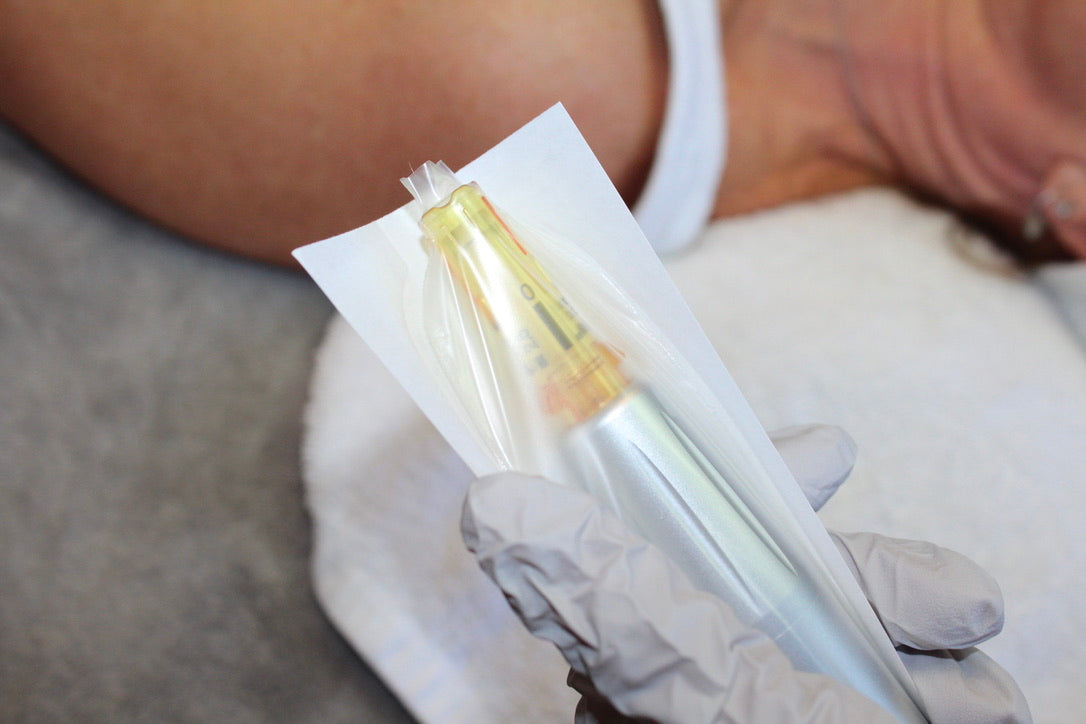
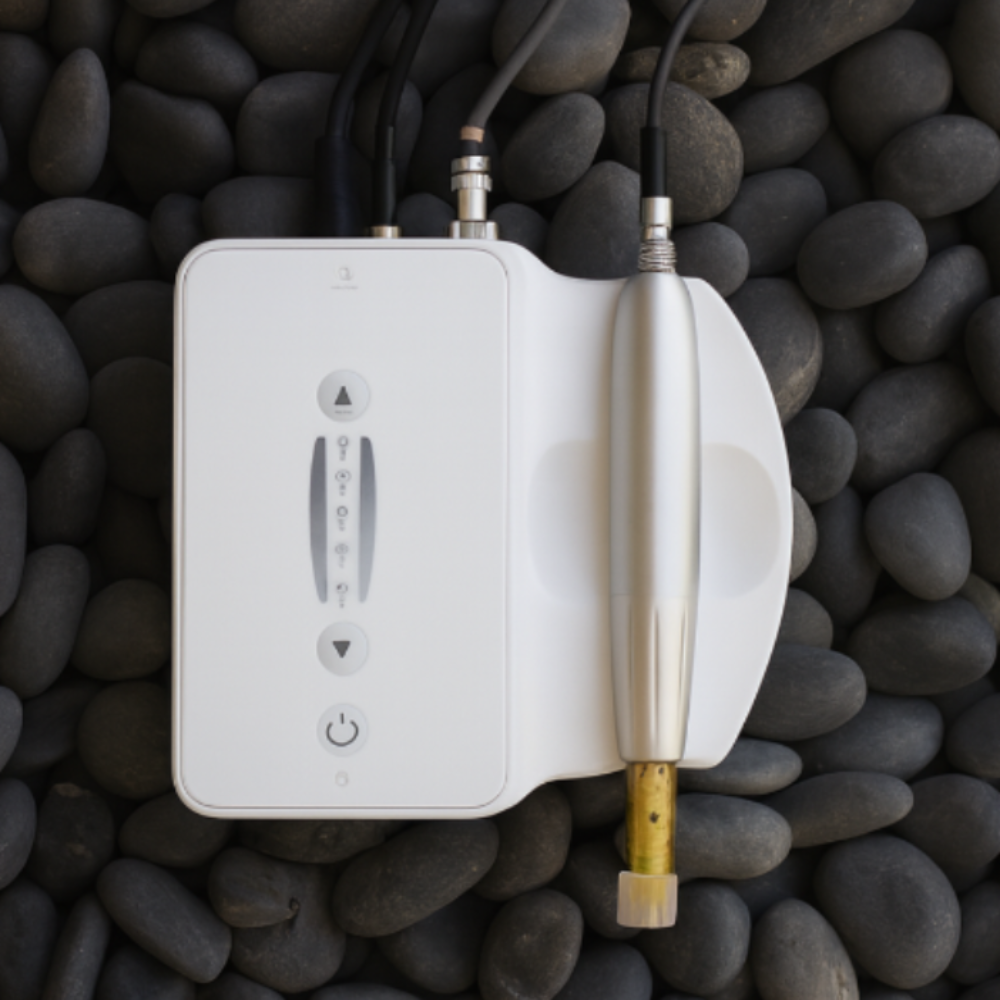
Following the preparation period, the clinician performed a conservative facial microneedling treatment using a professional-grade device with sterile, single-use cartridge technology. The focus was even, controlled coverage rather than chasing pinpoint bleeding or an aggressive endpoint.
Treatment depth was adjusted by facial zone and kept conservative in pigment-affected areas. The practitioner used light pressure, limited passes, and avoided overworking the skin. A sterile, non-irritating glide medium was selected, and the procedure was stopped once a uniform erythema endpoint was achieved. There was no attempt to force rapid correction through deeper needling.
This is where precision engineering becomes clinically meaningful. Reliable depth control, stable handpiece performance, and hygienic disposable cartridges help practitioners create repeatable protocols. They do not replace judgment. A premium device supports treatment consistency; the provider still determines whether the patient’s skin is calm enough, which zones need less intensity, and when to postpone a session.
Post-treatment care was deliberately simple. The patient used gentle cleansing, hydrating barrier support, and daily tinted mineral sunscreen. For several days, she avoided exfoliating acids, retinoids, fragranced products, high-heat workouts, steam rooms, direct sun, and picking at any flaking. Her pigment-focused home regimen was reintroduced only after the skin had fully settled.
The initial plan allowed four to six weeks between sessions. This interval gave the clinician time to observe the skin’s response rather than treating on a rigid calendar. With melasma, more frequent treatment is not automatically better.
What Changed at Follow-Up
At the four-week review, the patient experienced expected short-term redness that resolved within approximately 24 hours. She did not report prolonged stinging, crusting, or new areas of post-inflammatory hyperpigmentation. Most importantly, she had followed the photoprotection plan consistently.
Photographs showed a modest softening in the contrast between the melasma patches and the surrounding skin, particularly across the upper cheeks. The forehead showed less change. Her complexion also appeared more hydrated and refined, although those visible improvements should not be confused with a cure for melasma.
A second treatment was performed using the same conservative philosophy. After the second session, the patient noted that makeup applied more evenly and that the darker cheek patches looked less defined. At the 12-week assessment, the clinician documented improved overall tone uniformity without a significant inflammatory setback.
The result was encouraging, not absolute. Residual pigment remained, particularly in the forehead area. The patient was reminded that maintenance would likely be necessary, that seasonal exposure could reactivate pigment, and that dermatology referral remained appropriate if prescription therapies, diagnostic evaluation, or management of worsening melasma was needed.
The Trade-Offs Professionals Should Explain Clearly
Microneedling may be a useful adjunct for selected patients, but it is not first-line magic for every case of melasma. A patient with active irritation, recent tanning, poor sunscreen adherence, uncontrolled rosacea, or a history of pronounced post-inflammatory hyperpigmentation may need stabilization or a different approach before any needling is considered.
Topical products also require restraint. The microchannels created during treatment can increase penetration, which means inappropriate ingredients may increase irritation. Do not assume that a product marketed as brightening is suitable for use during or immediately after microneedling. Professional product selection, ingredient knowledge, sterile technique, and scope-of-practice compliance are essential.
Expectations are another clinical safeguard. The best candidates understand that treatment may improve the appearance of uneven tone, texture, and radiance while melasma itself remains vulnerable to recurrence. Before-and-after imagery should be standardized, ethically presented, and accompanied by the context that individual response varies.
A Better Framework for Future Cases
For a practice, the strongest melasma protocol is not defined by one device setting. It is defined by a repeatable assessment process: identify triggers, evaluate skin stability, prepare the barrier, use conservative parameters, document carefully, and adjust based on the skin’s actual response.
Dermapen treatments can be positioned within that framework as a precision-led option for appropriate patients, supported by professional education, sterile consumables, and a thoughtful home-care plan. The priority is always to treat the skin in front of you, rather than the result a patient hopes to see after one appointment.
When melasma is approached with patience, clinical discipline, and respect for the skin’s pigment response, progress can feel deeply confidence-building. The most meaningful outcome is not a dramatic promise. It is helping each patient build a calmer, more consistent relationship with their skin - and truly love the complexion they are caring for.