


How to Disinfect a Microneedling Pen Safely
AdminA beautiful microneedling result begins long before the first pass across the skin. It begins with a treatment space that protects the client, the practitioner, and the integrity of every professional service. If you are searching for how to disinfect microneedling pen equipment, the first principle is simple: the cartridge and the handpiece are not cleaned the same way.
A sterile, single-use cartridge should never be disinfected for reuse. It is a one-client, one-treatment consumable. The pen handpiece, meanwhile, requires careful surface decontamination according to the device manufacturer's instructions for use. That distinction is where a confident clinical protocol starts.
Why microneedling device hygiene requires precision
Microneedling creates controlled microchannels in the skin. This is central to the treatment's rejuvenating potential, but it also means hygiene cannot be treated as an afterthought. The treatment field, supporting products, gloved hands, device surfaces, and waste stream all need to work together as one considered protocol.
A handpiece can be contaminated by contact with gloved hands, treatment surfaces, topical residue, or an accidental cartridge leak. Disinfection reduces microorganisms on the external surface of reusable equipment. Sterilization is a different process, designed to destroy all microbial life, and it is not something to assume can be performed on an electrical handpiece without explicit manufacturer approval.
For professional practices, the goal is not simply to make a device look clean. The goal is to maintain a repeatable, documented standard that supports client safety, protects your investment, and reflects the level of care your clients expect from an advanced aesthetics provider.
How to disinfect microneedling pen handpieces between clients
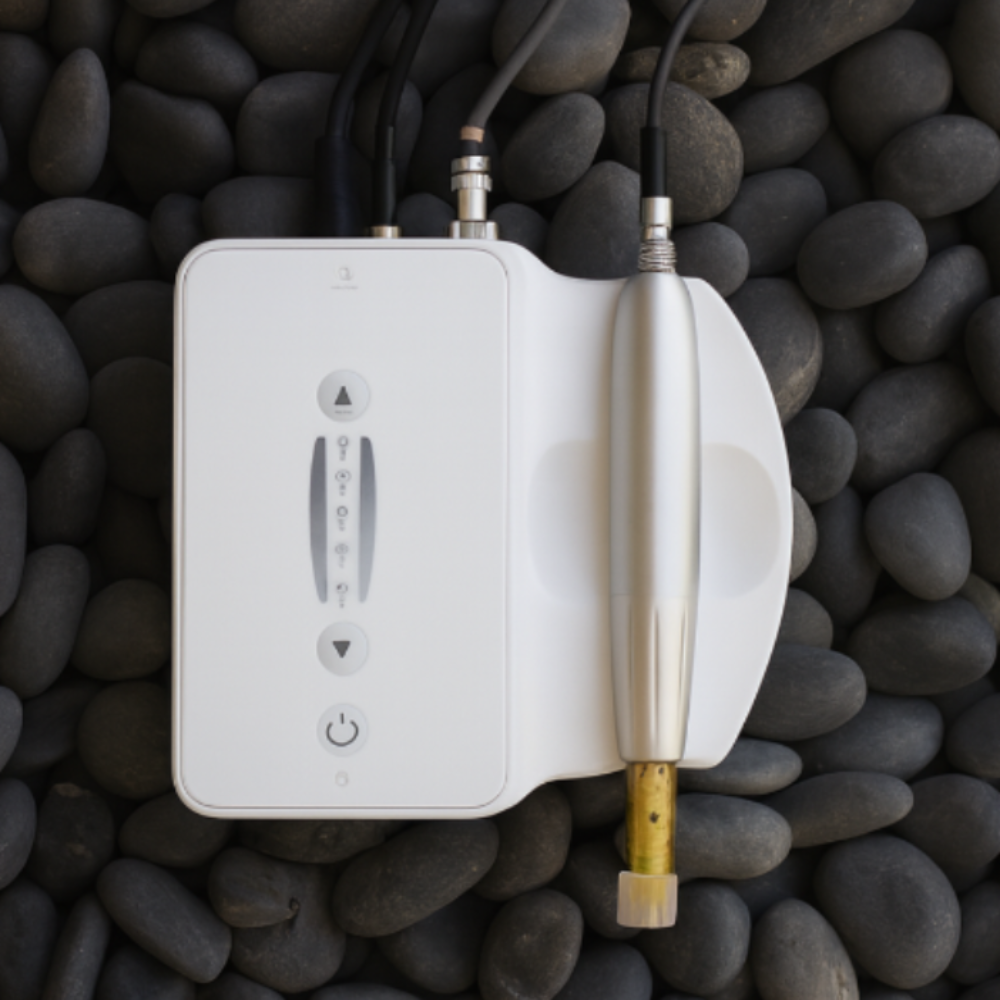
Always begin with your device's current instructions for use. Your pen manufacturer specifies which disinfectants are compatible with the handpiece housing, charging contacts, seams, and protective coatings. A product that is suitable for a countertop may discolor, crack, or compromise a precision device over time.
Once the treatment is complete, remove the used cartridge while wearing appropriate personal protective equipment. Dispose of it immediately in the appropriate sharps container according to your state and local regulations. Never recap, rinse, soak, or attempt to reuse a cartridge, even if it appears intact.
With the cartridge removed and the device powered off or disconnected from its charging source, first remove visible residue from the exterior. Use a clean, low-lint wipe that is compatible with the device. This preliminary cleaning matters because disinfectant is less effective when it is applied over serum, blood, or debris.
Next, apply an approved, facility-grade disinfectant to a wipe, rather than spraying directly onto the pen unless the manufacturer specifically permits direct application. Wipe the exterior surfaces thoroughly, taking care around buttons, vents, cartridge connections, charging ports, and any opening where fluid could enter. The handpiece should be damp enough for the disinfectant to work, but never saturated.
Respect the disinfectant's labeled contact time. This is the amount of time the surface must remain visibly wet to achieve the stated level of disinfection. A quick wipe followed by immediate drying may leave your protocol incomplete. If the label requires a longer contact time, use enough product to keep the surface wet for that duration without allowing liquid to pool.
Allow the handpiece to air dry completely before storing it, charging it, or attaching a new sterile cartridge. Do not use heat, compressed air, or a towel to rush the process unless your device instructions specifically allow it. When dry, return the pen to a clean, protected storage area away from used supplies and treatment waste.
Build the protocol around the cartridge, not just the pen
The most common hygiene mistake in microneedling is focusing only on the visible handpiece. The cartridge is the component that enters the treatment zone, so sterile single-use cartridge handling deserves the same level of attention.
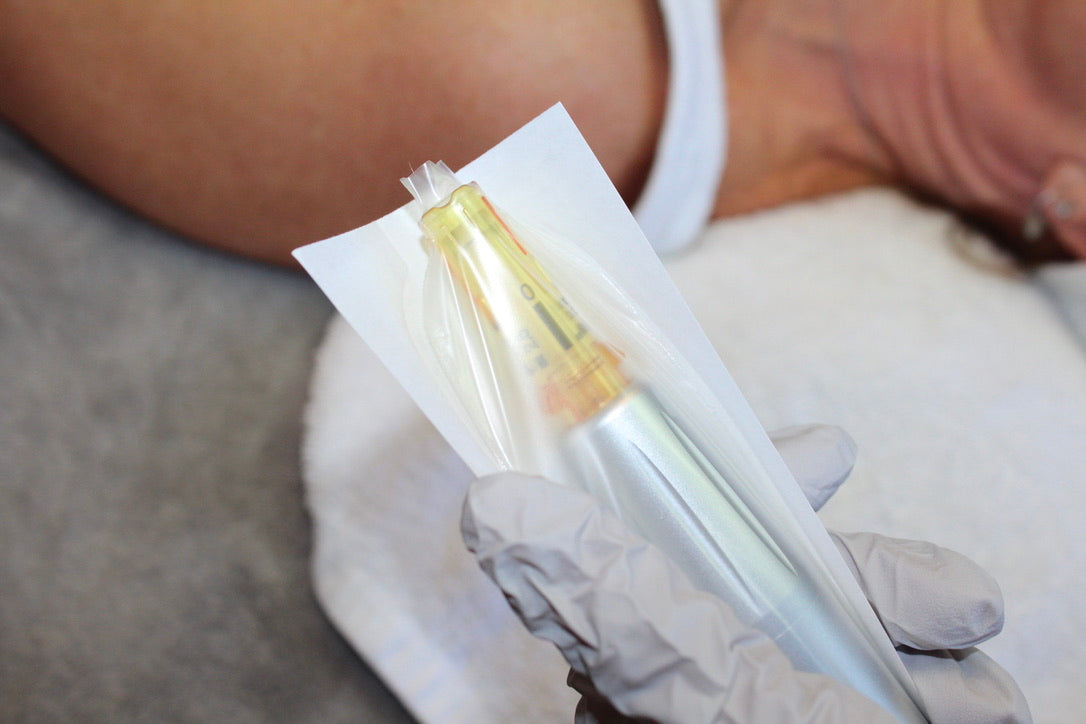
Open a new cartridge immediately before treatment, ideally within the client's view. Confirm that its packaging is sealed, undamaged, and within the stated expiration date. Attach it without touching the needle end or allowing it to contact a non-sterile surface.
If a cartridge is dropped, its seal is compromised, or it touches an unclean surface before use, discard it. The cost of a replacement cartridge is small compared with the trust built through uncompromising standards. This is especially relevant in busy clinics, where hurried room turnover can create avoidable lapses.
Dermapen's professional approach to precision treatment is best supported by the same discipline in consumable handling: a fresh sterile cartridge for every client, every time.
Do not soak or autoclave an electrical handpiece
Unless the manufacturer explicitly states otherwise, do not immerse a microneedling pen in liquid, place it in an ultrasonic cleaner, or autoclave it. These methods can damage internal electronics, reduce battery performance, degrade seals, and affect the calibrated function of the device.
It depends on the model whether a detachable, non-electrical external component can be processed differently. That is why the instructions for use should always take priority over generalized advice. When there is uncertainty, pause and verify rather than improvising.
Choose disinfectants for compatibility, not convenience
A professional-grade disinfectant must be appropriate for the level of disinfection required in your setting and compatible with your particular handpiece. Follow the product label exactly for dilution, contact time, personal protective equipment, and safe handling. If your facility has infection-control policies, those policies may be more specific than general device-care guidance.
Avoid combining chemical products or substituting household cleaners for approved clinical disinfectants. Fragrance, harsh solvents, and unapproved solutions can leave residue or prematurely wear exterior materials. Alcohol-based wipes may be permitted for some devices, but they are not universally appropriate, particularly for repeated use on certain finishes and plastics.
The right choice is the one approved by both the disinfectant label and your device manufacturer. This protects more than the pen's appearance. It helps preserve treatment reliability, comfort, and the professional presentation of your practice.
Keep the treatment room from recontaminating the device
A disinfected pen can be contaminated again in seconds if it is placed on an unprepared tray or handled with gloves that have touched used materials. Establish a clear clean-to-dirty workflow in every room.
Before the client arrives, disinfect treatment surfaces and prepare only the supplies needed for that appointment. Keep sterile cartridges, clean gauze, and unopened aftercare products separate from used items. During treatment, avoid touching drawers, phones, keyboards, and cabinet handles with contaminated gloves. If you do, change gloves before returning to the treatment field.
At the end of the appointment, dispose of single-use materials first, then clean and disinfect the handpiece and environmental surfaces. Hand hygiene should occur before and after glove use. These small, consistent actions help create the calm, elevated experience clients notice - even when they cannot see every step happening behind the scenes.
Document your hygiene standard
For med spas, salons, and aesthetic clinics, a written protocol turns good intentions into dependable operations. Your protocol can include the approved disinfectant name, required contact time, cartridge disposal process, handpiece storage requirements, and procedures for accidental contamination.
Train every provider to follow the same sequence, including temporary staff and new team members. Review the protocol whenever you introduce a new device, cartridge format, disinfectant, or treatment room workflow. Keeping batch information and maintenance records can also make troubleshooting easier if a device needs service.
State board rules, local health department requirements, OSHA expectations, and medical oversight standards can vary. If your practice treats compromised skin, operates under medical direction, or uses additional blood-exposure precautions, align your workflow with the regulations that apply to your facility.
When to take the pen out of service
Remove a microneedling handpiece from use if it has visible cracking, damaged seals, fluid intrusion, erratic operation, corrosion near a connection point, or residue that cannot be safely removed. Do not try to cover damage with tape or continue using a device because it still powers on.
A precision treatment deserves precision equipment. Arrange authorized inspection or service before returning the handpiece to the treatment room. Protecting that standard safeguards your clients' confidence as much as it protects your equipment.
Your hygiene protocol is part of the treatment result. When each cartridge is fresh, each surface is properly disinfected, and each step is completed without shortcuts, clients can settle into their appointment with confidence - ready to glow with care that feels as refined as the technology behind it.